Dina Kalibekova

Healthcare · AI · B2B

Defect AI

Description

Defect AI reads a clinic's medical records and points out what is missing or doesn't match the Ministry of Health's orders and clinical protocols, each finding with the clause it comes from. I'm the product manager: I decide what we build, how it speaks to doctors, and how we explain it to clinics.

Project details

Date:
2025 → now
Team:
The Rette team
My role:
Product manager
defect.kz ↗
The film I made for clinic directors: what Defect AI does, in a doctor's day. 2:32, in Russian, sound on.

What I owned

The problem

A medical record has to follow the Ministry of Health's orders and clinical protocols. There are more than 1,200 of them, and they keep being revised. Checking records against them by hand is slow, and it takes time from both the doctors who write the records and the experts who review them.

How might we

check every record against the protocols in seconds, and still leave the decision with the doctor?

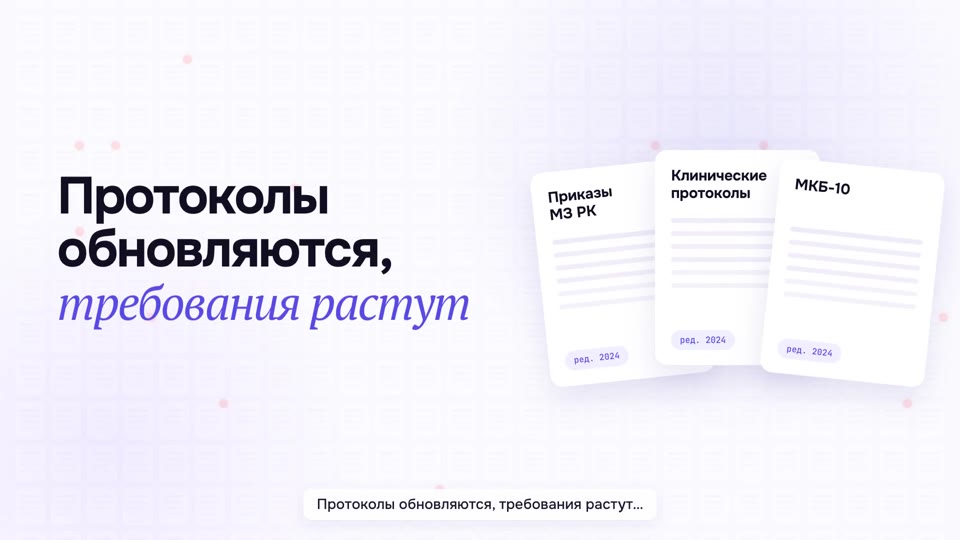
Three documents labelled Ministry orders, clinical protocols and ICD-10, each with a revision date.
Protocols keep being revised, and the requirements grow.

Who it's for

The doctor

Polyclinic or hospital

Writes dozens of records a shift, between patients.

Problem

The protocols keep changing, and a missing line is easy to miss at the end of a long day.

What I made for it

A check in 5 to 10 seconds, even inside the clinic's own system through a Chrome extension, with the clause for each finding.
The quality expert

Inside the clinic

Reviews the clinic's records against the orders and protocols.

Problem

A manual check can't keep up with the number of records.

What I made for it

A whole export from the clinic's system checked at once, defects ranked by how serious they are, and about 95% less time spent searching.

Core principles

  1. Advice, not verdicts

    Every finding is a suggestion. The product never tells a doctor what a record will lead to; the doctor makes the final call.

  2. Always show the source

    Each defect links to the order or protocol clause behind it, so a doctor can check it instead of taking it on trust.

  3. Meet doctors where they work

    No integration needed: upload an export, a PDF or a Word file, or use the Chrome extension inside the clinic's system. Patients' personal data is not stored.

What it does

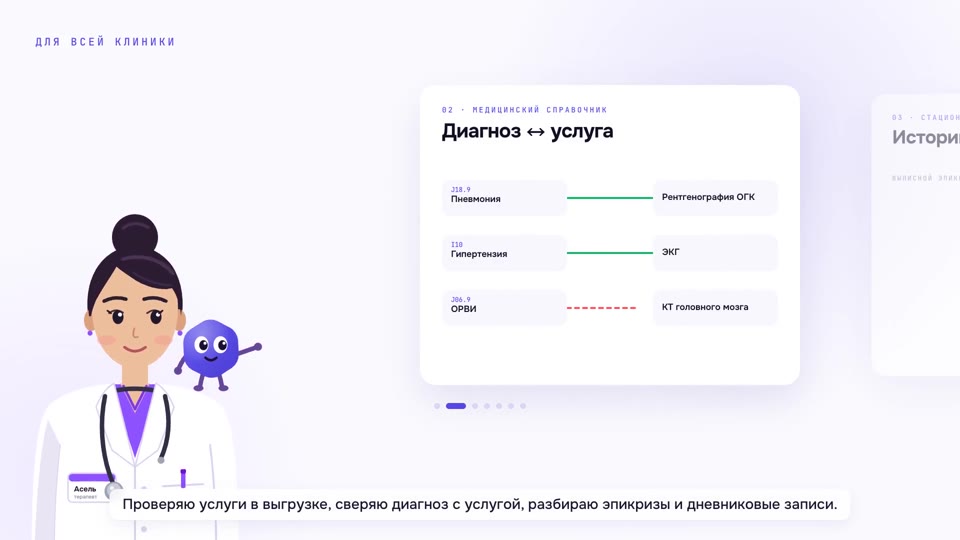
Checks for the services in an export from the clinic's system, for the diagnosis against the service, for outpatient and inpatient records with a score out of 8, for discharge summaries and for inpatient diary notes. Around them: a written justification for each defect code, and a search across the protocols in plain language, with sources.

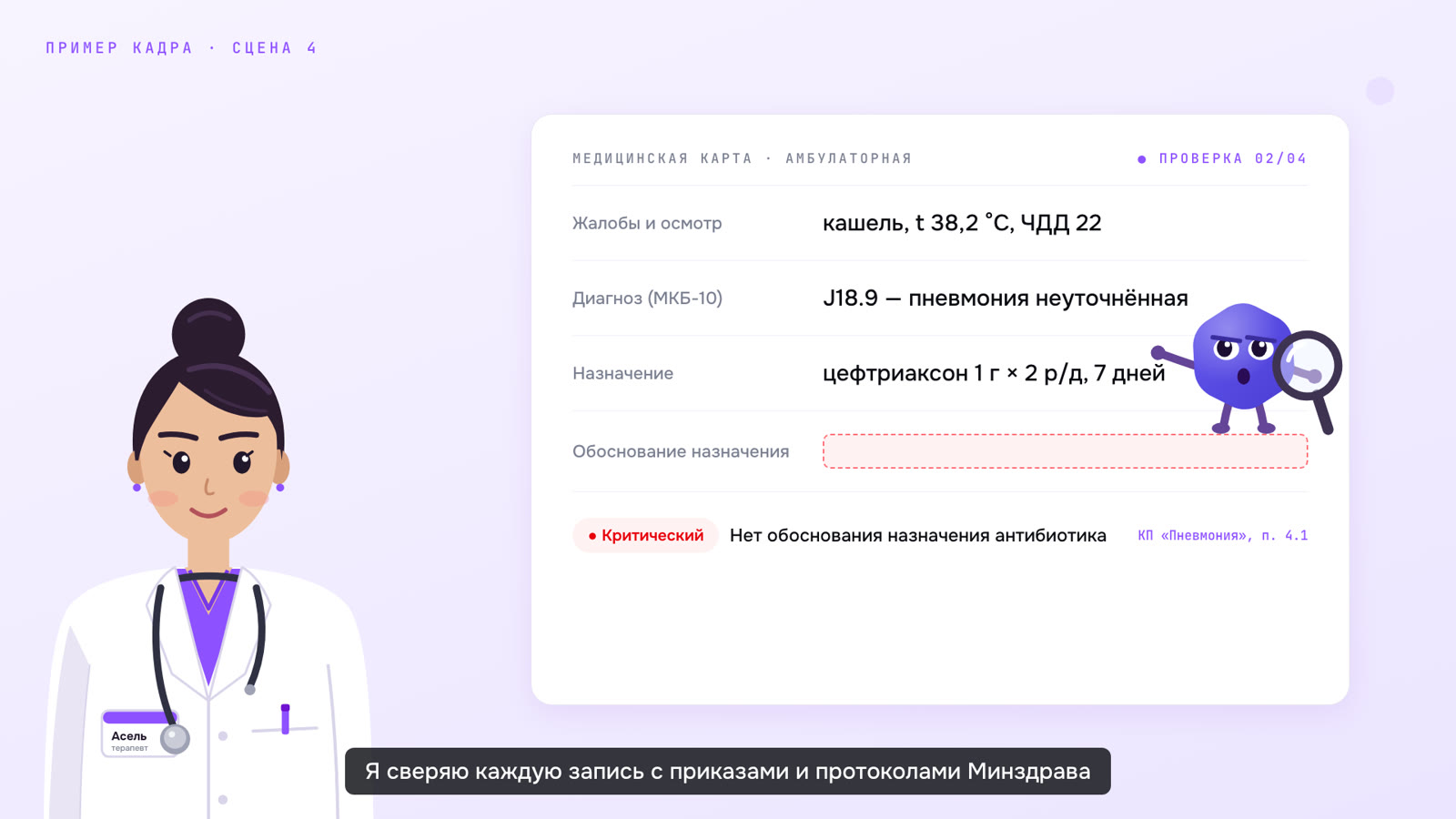
A record with pneumonia and an antibiotic prescribed; the justification field is empty and flagged as critical, with the protocol clause.
One finding: no justification for the antibiotic, with the protocol clause it comes from.
A table matching diagnoses to services, with one mismatch marked in red.
Diagnosis against service: the mismatch stands out.

Explaining it to clinics

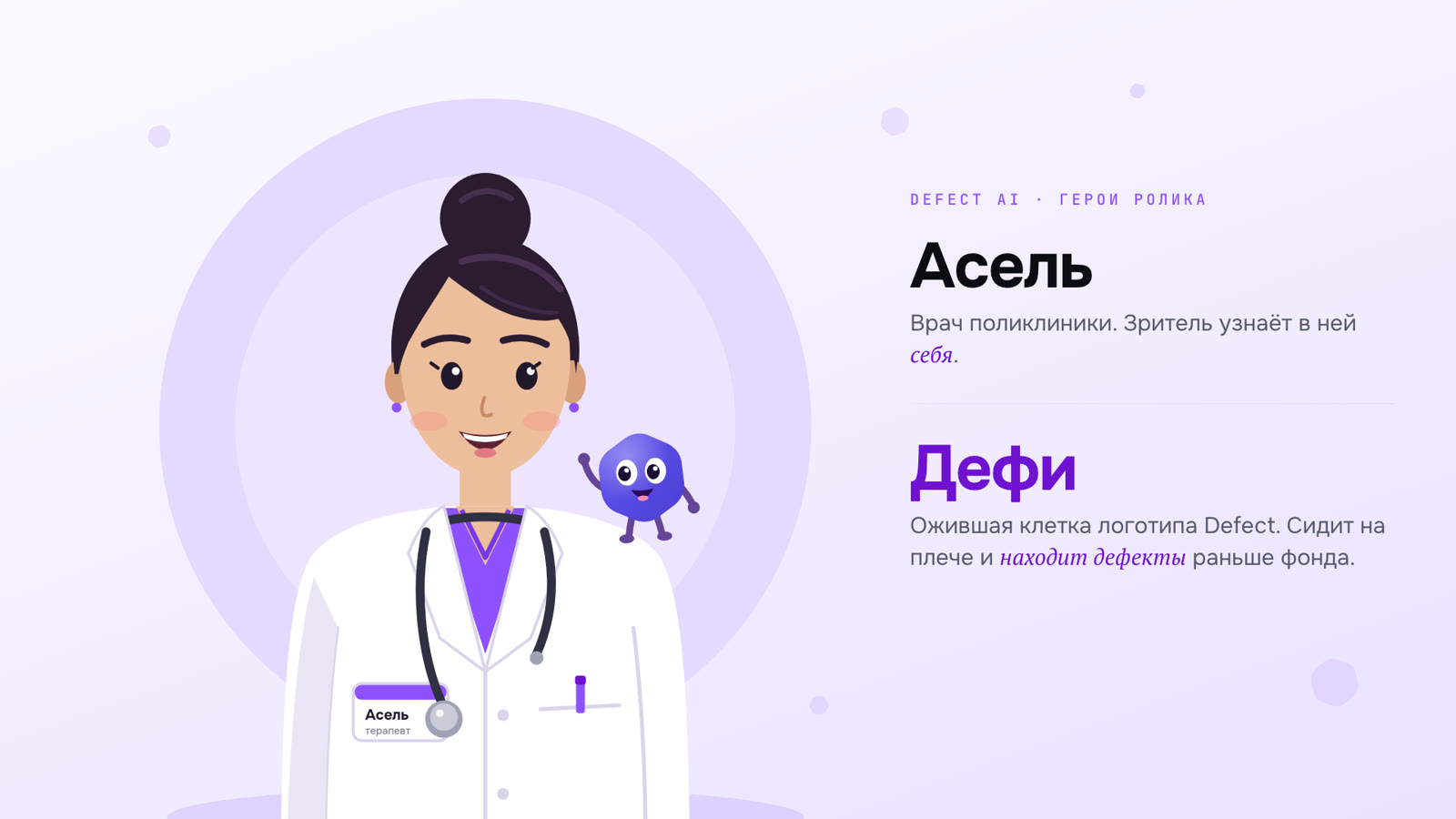
Clinic directors don't have time for a product demo, so I made a film that follows one doctor, Asel, through the end of a shift, with Defi, a small helper on her shoulder: one cell from the Defect logo, with eyes.

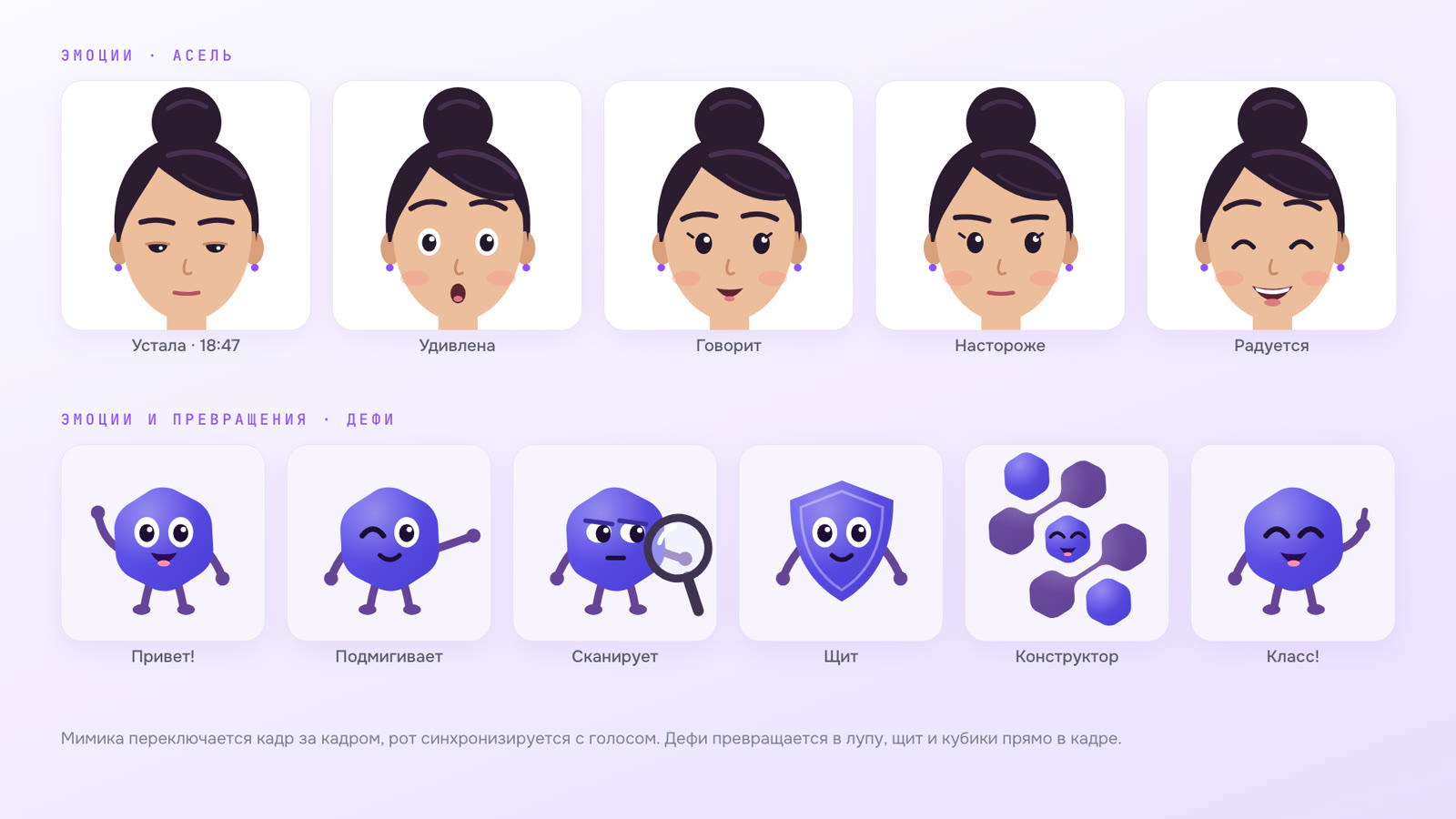
Defi turns into what each moment needs: a magnifying glass for the check, a shield for patient data, building blocks for a clinic's own setup. The characters are drawn in code, so the same drawing can blink, talk and change mood. A high five between them looked odd in the first draft, so it became a nod.

Character sheet: the doctor Asel and the helper Defi.
Asel and Defi, first sheet.
Expression sheet for both characters.
Expressions, so the film can change mood without words.

Reflection & next steps

Where it stands

Clinics across Kazakhstan use it. More than 20 million records have been checked and 3 million defects found. In 2026 Defect AI was named Startup of the Year at the AI & Digital Bridge Awards.

What I'd do differently

Something you got wrong or learned late: a feature, a word, a decision.

What's next

What you're building next, and how you'll know it works.